Marketing for web designers requires a fundamentally different approach than most designers expect because the strategies that fill your pipeline consistently have nothing to do with having the prettiest portfolio. This guide covers 6 proven marketing strategies for web designers, including SEO and AI search optimization, case study creation, blogging, referral building, social media, and email marketing that turns leads into paying clients.


Without losing your nights and weekends to content planning.
Your website is your most important marketing asset, and it needs to work harder than just looking good. Optimize it for SEO with the right keywords so you show up when potential clients search for web designers in your niche or location, and increasingly, optimize for AI search tools that are becoming how people research web designers.
Your portfolio shows what you made. A case study shows why it worked, and that's what converts. Go beyond the screenshots and talk about the problem your client came to you with, the design decisions you made to solve it, and the results they saw after launch. Clients don't just want to see that you can design—they want evidence that you can solve their specific problem.
Blogging is one of the best ways a web designer can market themselves because the content keeps working long after you hit publish. Write about the topics your ideal clients are searching for, and you become the expert they already trust before they ever reach out. One well-written post can generate leads for years. Plus it helps you optimize your own website.
Past clients are your best source of referrals but only if you make it easy and memorable to recommend you. Stay in touch after a project wraps so they remember you long after. Other designers are also a powerful referral source—build genuine relationships with designers who work in different niches or price points and you'll find that the work you can't take on comes right back around to you.
Social media matters for web designers, but it doesn't need to be your primary marketing channel. Pick one or two platforms where your ideal clients actually spend time and show up consistently with content that demonstrates your expertise. Quality and consistency beat volume every time, and a social media scheduler makes it easy to stay visible without living on your phone.
Email marketing is one of the most underused channels for web designers—and one of the most effective. Create a lead magnet that solves a specific problem your ideal client has and use it to start building an email list of people who are already interested in what you do. Then nurture that list consistently with helpful content so that when they're ready to hire a designer, you're the first person they think of.

The most effective way for web designers to get clients consistently is to combine referrals with a strong organic presence—a website optimized for search, a blog that builds authority over time, and an email list that nurtures potential clients until they're ready to hire. Referrals from past clients and other designers tend to be the highest-converting source, but they're not reliable enough on their own. The designers who stay fully booked have a mix of strategies working together that keeps leads coming in even when they're heads-down on projects.
The most important shift is moving from reactive marketing (posting when you have time, reaching out when you need work) to proactive marketing—a consistent system that keeps running even during your busiest project months. That means having a marketing plan, protecting time to execute it, and tracking what's actually driving inquiries so you can do more of what works. Enji was built specifically to make that system possible for designers doing their own marketing, without adding another full-time job to your plate.
Web designers need to be on social media, but they don't need to be on it constantly—and that distinction matters a lot for designers who are already stretched thin. Pick one or two platforms where your ideal clients actually spend time, show up with content that demonstrates your expertise, and use a scheduler to batch and automate so you're not creating content on the fly. Social media is a visibility tool, not a lead generation machine, which means the goal is to stay consistently present rather than to post every day or chase every trend.
The web designers who get the best results from social media treat it as one part of a broader marketing plan—not the whole plan. Process videos, before-and-after transformations, website teardowns, and client results all perform well because they show what you can do rather than just telling people about it. If social media feels overwhelming, the problem usually isn't the content—it's not having a system that makes it fast enough to actually happen consistently.
The most reliable way to get more web design referrals is to make it easy, timely, and memorable to recommend you—not just assume good work will speak for itself. Follow up after every project wraps with a genuine check-in, make it simple to pass your name along, and stay in touch with past clients so you're still top of mind six months later when someone in their network asks who they should hire. Good work is the baseline. What actually generates referrals is genuine connection.
Other designers are also an underused referral source that most web designers overlook entirely. Build genuine relationships with designers who work in different niches, price points, or geographic markets than you do because the projects they can't take on are a natural fit for your pipeline, and vice versa. The designers who get the most consistent referrals aren't necessarily the most talented ones in their market. They're the ones who invested in relationships and made it easy for people to send work their way.
Yes—blogging is one of the best ways a web designer can market themselves because a well-written post can generate leads for years by ranking on Google and appearing in AI search tools like Claude, ChatGPT, and Perplexity. Unlike social media posts that disappear in a few hours, blog content keeps working long after you hit publish, and for web designers specifically, it positions you as the expert before a potential client ever reaches out. One strong, well-optimized post per month is more valuable than four rushed ones.
The key is writing about what your ideal clients are actually searching for, not just what you find interesting. Topics like "how to know when your website needs a redesign," "what to look for when hiring a web designer," and "why your website isn't converting" all answer real questions your potential clients are typing into search engines right now. And if the writing part feels like a barrier, Enji's AI copywriter drafts blog posts in your brand voice so you're never starting from scratch.
The web designers who stay booked showcase real project outcomes, know exactly who their ideal client is, and show up consistently on one primary platform instead of scattering across five. Referrals from happy clients compound all of it.
Start with the network you have: past clients, adjacent freelancers (copywriters, brand designers, photographers), and the communities where your ideal clients gather. Then make your work easy to find, a portfolio with results and an active presence on one platform you can sustain.
Outcomes, not just screenshots. For each project, show the problem the client had, what you built, and what changed: faster load times, more inquiries, more bookings. Clients hire results; the visuals just get their attention.
A clear ideal client makes every part of marketing easier: your portfolio speaks to them, your content answers their questions, and referrals know exactly who to send you. You don't have to niche forever, but "websites for anyone" is the hardest thing to market.
The one you'll actually show up on consistently. LinkedIn works if your clients are businesses; Instagram if your work is visual and local. Inconsistency on any platform is worse than absence, so pick one primary channel and treat the rest as optional.
Designing a website takes a lot of deep thinking—the kind that makes your eye balls hurt. But if you only use that kinda energy on your client work, you're always going to be stuck in a feast or famine cycle. And who likes thinking their business is going to go under because they have no leads? Believe it or not, you can get your designs and marketing done. You've just gotta change your approach.
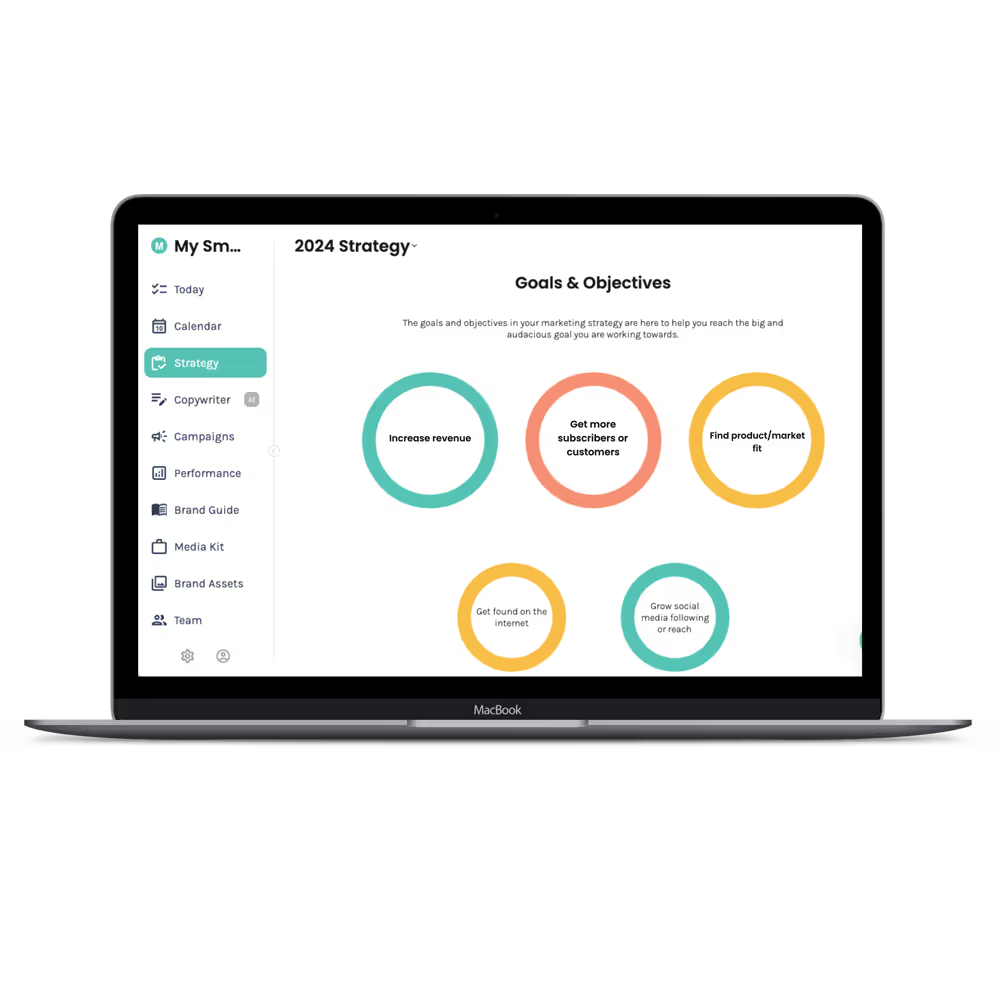
When you show up consistently, you become the designer people keep seeing—which means you're the one they think of when they're ready to hire. Enji helps you get into a marketing rhythm that keeps your web design business visible even during the months when you're deep in client work and have nothing left for your own marketing.

You need a repeatable structure for your marketing so you can know what's coming. Enji creates a simple marketing plan for you that fits your real life.

Marketing tasks only get done if they get done quickly. Enji helps you draft and schedule content on a weekly basis to work ahead and be consistent.

When you have clarity about what marketing is working, you can do more of that and cut the rest. Enji tracks your results so you can see how you're growing.
Because when your plan and your doing live in the same place, your marketing finally gets done consistently—even during your busiest client months.
Enji builds you a customized, realistic, and actionable marketing plan based on your answers to a questionnaire that takes about 5 minutes to finish.

Take your love-affair with organization to a whole new level—with Enji’s whip-smart marketing calendar that ensures you never miss a task or deadline.

Make purposeful moves toward your goals when you want to push a little more and get started quickly with 16 marketing campaign templates to choose from.

Writing is hardly anybody's thing, but it doesn't keep you from publishing new blogs or posting on social media when you have an AI copywriter that sounds like you.

The dream is to consistently be on social media without constantly having to be on your phone. The dream is possible when you pre-schedule posts to go live in the future.
Quickly see what is and isn’t working—so you can understand where to invest your (very limited) time and what to adjust going forward.
Client work doesn't stand in the way of consistent marketing for these talented designers.

.svg)

The web designers with a full pipeline aren't the ones working harder. They're the ones who never go quiet. Enji is what makes that possible without adding a ton more screen time to days that are already long. Start your free 14-day trial today. No credit card required
Start For Free