Marketing in 2025 didn’t just feel harder. It was harder.
Not because small business owners stopped trying. Not because you “fell off.” Not because all of the sudden you got bad at doing business.
It’s harder because the entire landscape is a messy soup.
Algorithms. AI content slop. Longer sales cycles. More skepticism. People buying slower (or not at all). And you—trying to keep your business alive while also being the marketing department.
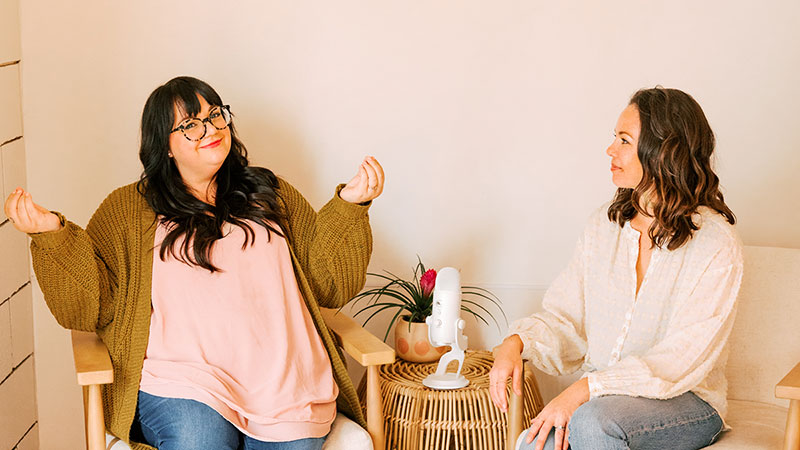
So I hosted a panel with four business coaches who are deep in it with clients every day, and we used the State of Small Biz Report as the jumping-off point. And their consensus?
Yep. The report was uncomfortably accurate.
Quick context: what the State of Small Biz report actually is
The State of Small Biz Report was built from a survey of 245 small business owners across 40 states.
Not “SMBs” in the corporate sense. Real people. Real solopreneurs. Real tiny teams. Real “I do my marketing between client work and making dinner” energy.
The goal wasn’t to shame anyone. It was to:
- show you what’s actually happening in our corner of the business world
- help you make smarter marketing decisions (with evidence, not vibes)
- and remind you you’re not the only one feeling like, “Wait… is it just me?”
Spoiler: it’s not just you.
Meet the business coaches on the panel
Laylee Emadi—host of the Creative Educator Conference, coaches educators and speakers in the creative industry
Frenchie Ferenczi—business strategist, fractional exec in women’s health startups, and a budding stand-up comic (yes, really)
Angelica Pompy—business coach and marketing strategist (marketing, sales, systems… and keeping your mind intact)
Molly Balint—business coach and storytelling expert helping women get visible with stronger messaging
First question: “Does this report reflect what you’re seeing?”
The answer was basically: unfortunately, yes. But what stood out wasn’t one stat.
It was the pattern.
Frenchie nailed it: it’s not one change we’re trying to adapt to. It’s a dozen small changes happening at the same time—and that’s what makes it so hard to know what to do next.
Molly added something that hit hard too. As more businesses become personal brands, we’re being asked to hold way more “plates” than we used to: visibility, messaging, sales, content, community, trust-building. All while still delivering the actual service/product that pays the bills.
So yeah…burnout in 81% of small business owners makes sense.
The line of the day: “Half-done work is heavy.”
This was one of the most important parts of the conversation because it’s not even about strategy. It’s about psychology.
Molly pointed out one of the stats that stood out in the report: people who consistently complete the marketing work they plan are less likely to experience burnout.
Not because they’re magically better at marketing. Because they’re not carrying a million open loops.
And Frenchie summed it all up in the little but powerful phrase: Half-done work is heavy.
And honestly? That’s the real reason marketing feels exhausting sometimes. Not the doing—the constant background noise of “I should be doing ___.”
Why marketing felt harder in 2025: trust recession + AI slop
Frenchie also called out something a lot of us have been feeling:
1) We’re in a trust recession: People are more skeptical because in the past, they’ve invested in things that under-delivered. They’ve been burned. So now? They hesitate longer.
Which means you can’t just “announce the offer” and expect people to jump. Sales cycles are longer. Trust-building takes more reps. And that’s extra work.
2) AI made the internet louder and more "same"
The rise of AI didn’t just speed things up—it created an avalanche of content that looks identical.
You know the kind:
- same formatting
- same cadence
- same “here are 3 tips” structure
- same recycled thought leadership tone
And your brain can feel it. You start scrolling past things before you even read them.
Which means standing out now requires more than “posting consistently.”
It requires being human even if you are trying to get things done faster with the help of AI.
The stat I hate: 75%of small business owners don’t have a marketing plan
This is the part where I clutch my pearls. 75% of small business owners are marketing without a plan.
So I asked Angelica how she’d help someone start (without turning it into a 40-page strategy doc).
Her answer is a great approach that works for her and might for you: Start by mapping your year. But not to over-schedule yourself. To create white space and stop stacking everything on top of everything.
Her framework:
- pick one focus per quarter
- give yourself 6–8 weeks of runway to market it (plant seeds, prime your audience, then sell)
- work backward from your dates
- protect your days off like they’re client meetings (because they should be)
And she said the quiet part out loud: the hardest part is sitting down to make the plan.
But without it, you’re stuck making CEO-level decisions every time you open Instagram.
“Half of business owners would quit a social media platform if they could.”
This stat is one of my favorites because it’s so real. So I asked Molly: What do you do if you feel like you can’t walk away from social media? Her answer: stop trying to do it like everyone else.
Step 1: Go where your people are. Not where people say you “should” be.
Step 2: Choose the way you can show up without hating your life. If stories are easy? Do stories. If one feed post a week is all you can handle? Great.
And here’s where Molly and I are standing on the same soapbox: Consistency is whatever you can stick to consistently.
Not 5x/week. Not “every day.” Not “reels or you’ll die.” Whatever you can actually sustain.
Because forcing yourself into a marketing style you hate is how people end up quitting everything.
What to do when customers' ability to pay impacts you
The report showed that 31% of small business owners said customers’ ability to pay has significantly impacted their business. Which means: it’s not just you. And it’s not just “your content.”
Frenchie shared a personal example I think every business owner needs to hear: She launched a program that had always (like for 7 years always) sold well, and for the first time…zero people bought.
But instead of deciding she was doomed, she adjusted the offer:
- turned it from a 4-week program into a 3-day version
- lowered the price to match the reduced coaching time
And it sold.
The takeaway: sometimes the offer isn’t bad. The packaging just doesn’t match the moment.
Angelica shared a similar approach—loosening policies to meet clients where they were during a hard financial moment, and it built long-term trust.
Laylee also added something I loved: know your people and create ways for them to stay close even when they can’t access the “big thing.”
Give them something when they’re having a hard time getting everything.
That’s how you meet people where they’re at.
Tough love for the “Cool… I’m still changing nothing" folks
I ended the panel with a question I ask on every State of Small Biz report discussion because I need everyone to stop pretending. And that question is: What would you tell the business owner who reads the report and thinks, “Cool… I’m still going to keep doing what I’ve been doing though”?
Angelica: You can consume forever, but if you don’t do anything, nothing changes. Action creates results.
Molly: What worked before isn’t working the same now. You cannot keep playing 2020 marketing in 2026.
Laylee: Nothing changes if nothing changes—and most of the time you’re standing in your own way.
Frenchie: Try one new thing. Not everything. Just one.
And honestly? That’s the starting point.
You don’t need a complete business overhaul. You need one meaningful shift.
One closed loop.
One plan.
One decision.
One thing you’ll actually do.
If you want to make marketing your small business in 2026 easier than it was in 2025
This is the “do this, not that” summary from the panel.
- Stop winging it. Make a simple plan.
- Stop forcing social media. Choose a sustainable way to show up.
- Stop trying to do it all alone. Outsource something.
- Stop carrying open loops. Pick a few tasks and finish them.
- Stop assuming it’s just you. The market shifted. Adjust accordingly.
Because marketing is not supposed to feel like a daily existential crisis.
If it does? Something’s gotta change. And digging into the full State of Small Biz report is a solid first step.