The confusion between these two categories is understandable. Both project management software and marketing software live on your calendar, both organize tasks, and both promise to help you get more done. But they solve fundamentally different problems.
Pure project management software is tool-agnostic. Asana, Monday.com, Trello, ClickUp, and Notion don’t care whether you’re managing a website redesign, onboarding a new employee, or planning a marketing campaign. They give you a flexible workspace with boards, lists, timelines, and databases. They let you organize whatever you need. That flexibility is their strength and their limitation.
For marketing specifically, pure PM tools offer templates labeled “Social Media Calendar” or “Content Strategy.” But these templates are just pre-labeled columns and custom fields you fill in yourself. The social media calendar template gives you fields for platform, post copy, schedule, and status, but no strategy, no content ideas, no actual copy, and no way to publish. They’re frameworks, not solutions.
This matters because the gap between “organized” and “effective” is enormous. According to Enji's 2025 State of Small Business Report, owners with a documented marketing plan are 3x more likely to rate their marketing as highly effective. The same report found that small business owners who use data to guide their marketing decisions are 2.8x more likely to rate their marketing as effective. But most PM tools can’t show you marketing data at all. They can only tell you whether a task was completed, not whether it moved the needle.
Marketing software is built around the marketing workflow. Instead of handing you a blank canvas, it understands what marketing requires and provides the tools to execute each step. A platform like Enji starts by asking about your business, goals, audience, and available time, then generates a personalized marketing strategy and plan with specific tasks on your calendar. Those tasks come with built-in education so you understand why each one matters.
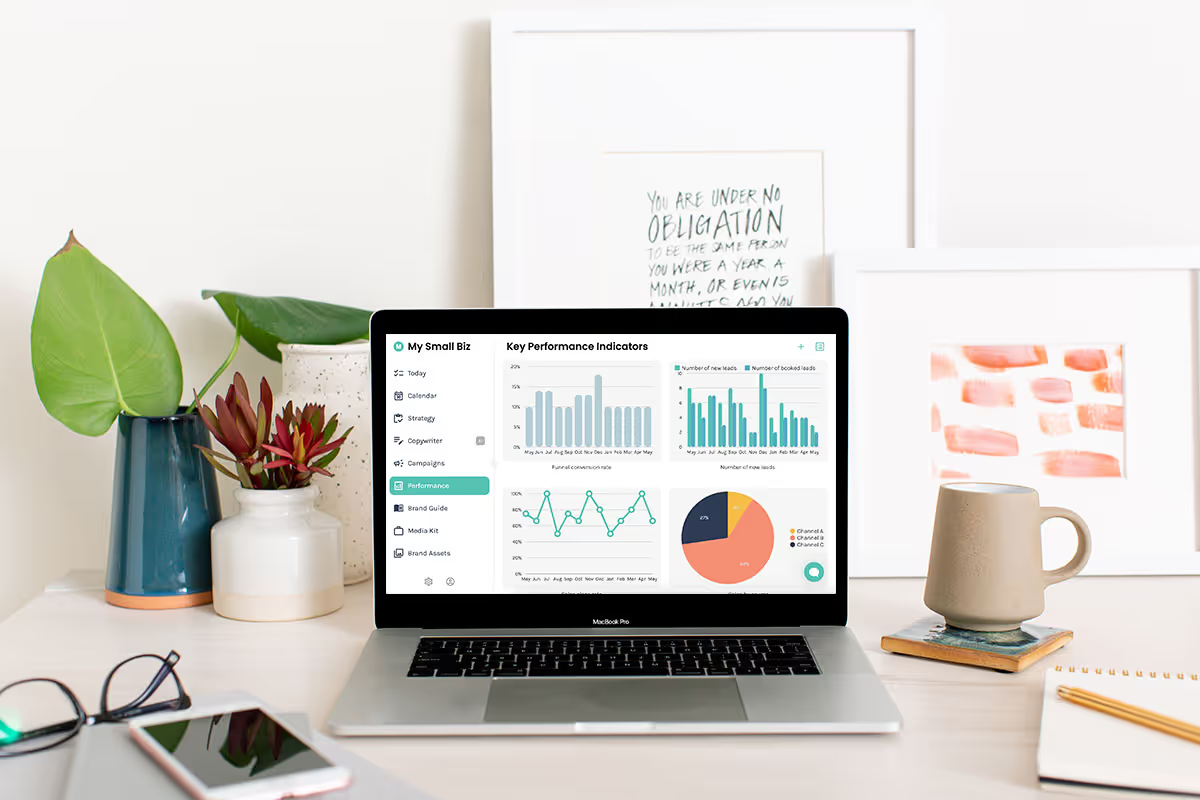
When it’s time to create content, marketing software includes an AI copywriter trained on your brand voice (not a generic AI assistant, but one that sounds like your business). When content is ready, you schedule and publish social media directly from the same platform. And when you want to know what’s working, a marketing-specific KPI dashboard pulls in your social and website analytics so you’re not digging through four separate dashboards.
The scale of this challenge is significant. According to the Federal Reserve's 2026 Small Business Credit Survey, 83% of businesses using AI use it for writing or marketing, which makes it the #1 use case. Small business owners are already turning to AI for marketing help, and the question is whether that AI lives inside their marketing workflow or in a separate tool they have to copy-paste from.
It’s the difference between managing marketing and actually doing marketing. PM tools help you stay organized, but they don’t help you succeed at marketing itself.
For small business owners (especially solopreneurs who are the marketing department, sales department, and operations department all in one) this distinction is critical. You don’t need another place to store your ideas. You need something that helps you turn those ideas into a real plan with real tasks that actually get done.