This question comes up constantly: “I’m already using a project management tool for my business. Shouldn’t I just manage my marketing there too?” Here’s the thing: generic project management tools are great at tracking tasks and deadlines, but they’re not great at helping you figure out what those tasks should be, or whether they’re actually working for your business.
When you use a general PM tool for marketing, you end up with a list that says “Write blog post” and “Post on Instagram.” But that’s not strategy - that’s just a to-do list. You still need to figure out what to write about, what your content should sound like, when to post, and whether any of it is actually bringing in customers.
The issue isn’t that tools like Asana, Monday.com, or ClickUp are bad. They’re excellent at what they’re built for. But marketing your small business isn’t just project management. It requires a system: plan what to do, create the content, get it out there, see what worked, and do more of that.
The data backs this up. According to Enji's 2025 State of Small Business Report, small business owners with a documented marketing plan are 3x more likely to follow through on their marketing tasks, but less than a quarter have one. The same report found that 4 in 5 small business owners rate their marketing as, at best, “somewhat” effective—despite actively investing time and energy every week. And 51% handle all of their marketing solo, typically in just 1–5 hours per week. These aren’t people who aren’t trying. They’re people working with real constraints who need tools that do more than organize tasks.
Most PM tools help with the first step (planning). A few help with pieces of the second (creating). Almost none help with the third (tracking results). And none of them provide a complete marketing system. According to LocaliQ's 2026 Small Business Marketing Trends Report, 50% of small businesses have no employees dedicated to marketing, which means the business owner is doing it all, and they need a tool that helps them execute, not just organize.
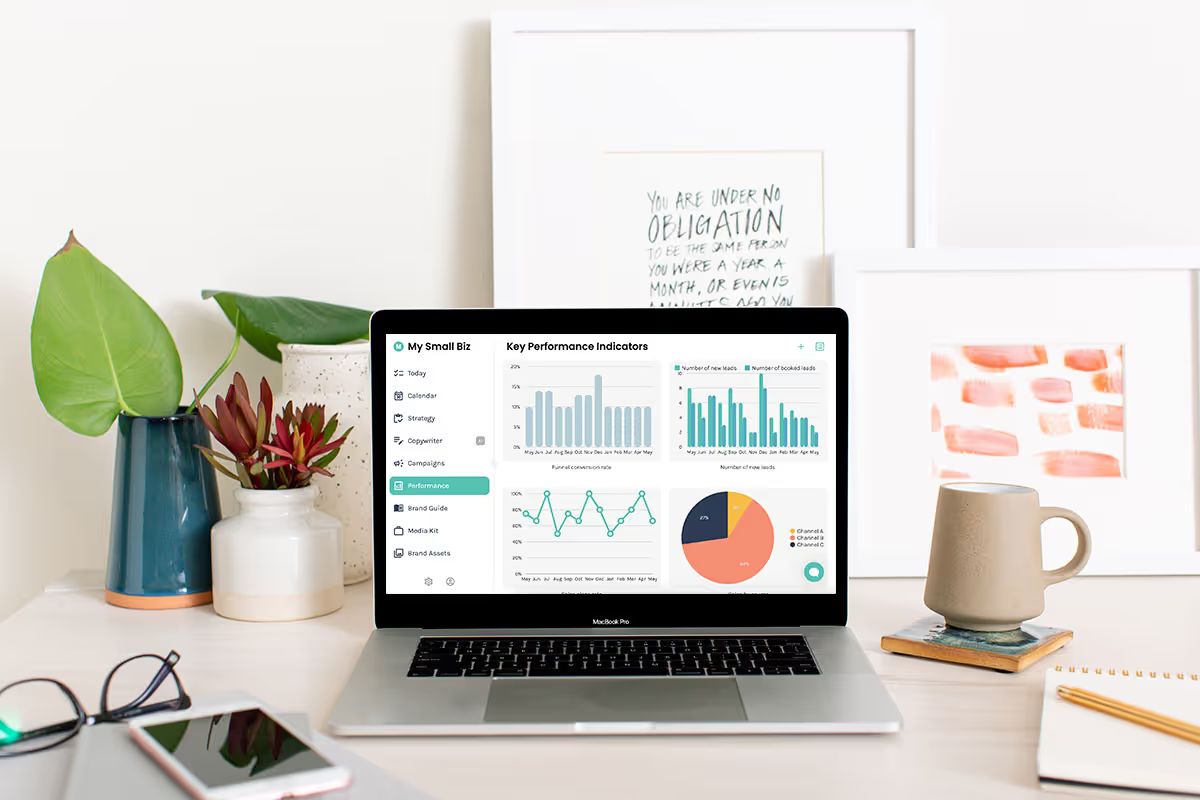
That’s the gap marketing-specific platforms fill. Enji creates your marketing strategy and plan by asking about your business, goals, audience, and available time. It then generates a personalized plan with specific tasks already on your calendar. It writes your content with an AI copywriter that learns your brand voice. It schedules and publishes your social media posts directly. And it tracks what’s working with a KPI dashboard that pulls in your social and website analytics.
The hybrid approach many businesses use: keep general project management (Asana, Monday, etc.) for operations and client work, and use Enji for marketing. This gives you specialized tools for each job without forcing the wrong system into the wrong role.
The bottom line: if you already have a marketing team with a defined strategy, a general PM tool can coordinate execution. If you’re a solopreneur or small team who needs help figuring out what to do and then actually doing it, you need a tool built for marketing—not just task management.
For the full breakdown, check out the 10 Best Marketing Project Management Software for Small Business in 2026 longer article.