If you’re running a small marketing agency or consultancy, you know the tool problem intimately. Most marketing platforms are built for one of two extremes: enterprise teams with big budgets and long onboarding timelines, or solo business owners managing just their own marketing. Neither fits the reality of a small agency managing 5–15 client accounts while also trying to market themselves.
The typical agency setup looks something like this: Asana or Monday.com for task management, Buffer or Later for scheduling, ChatGPT or Jasper for content drafts, Canva for design, Google Analytics for website data, and platform-specific dashboards for social metrics. That’s six tools per client none of which talk to each other. Multiply that across multiple clients and you’re spending more time managing tools than doing the actual marketing work.
Your clients are feeling the pain too. According to Enji's 2025 State of Small Business Report, 4 in 5 small business owners rate their marketing as, at best, “somewhat” effective. And 51% handle all of their marketing solo in just 1–5 hours per week with only 20% rating their marketing as highly effective. These are the clients hiring your agency. They need structure, consistency, and proof that the marketing is working and the tool you use to manage their marketing should help you deliver all three.
What small agencies actually need is one connected system where strategy, execution, and reporting live together with separate workspaces for each client. This is exactly how many small agencies and marketing consultants use Enji.
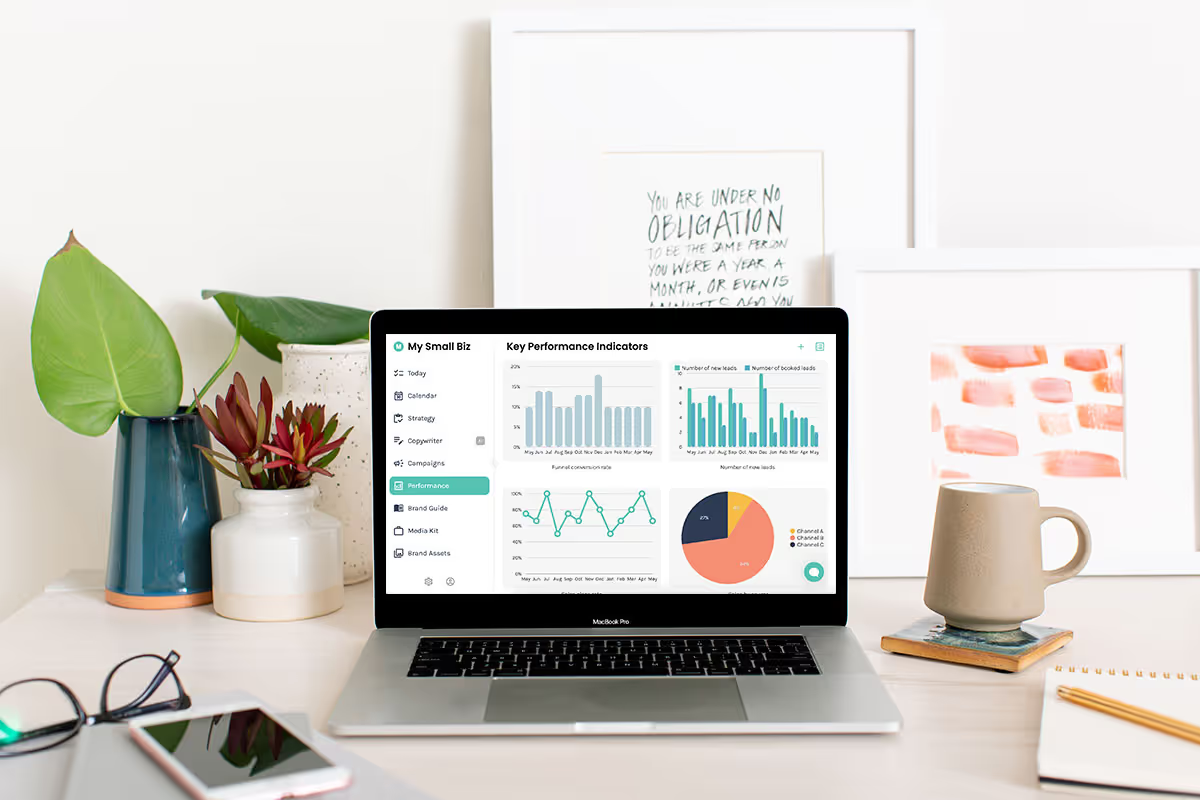
With Enji, you create separate accounts for each client. Each account has its own marketing strategy, calendar, AI copywriter (trained on that client’s brand voice), social media scheduler, campaign templates, and KPI dashboard. You can toggle between accounts from one login without managing multiple browser tabs or passwords.
You can also mix account types based on each client’s scope. Some clients might only need social media management and they get a social-only account. Others have broader marketing needs and get the full marketing suite. This flexibility means you’re not paying for features a client doesn’t need.
Client collaboration is built in. Add clients as team members at no extra cost so they can see their marketing plan, review content before it goes live, and understand what’s working through the KPI dashboard. When strategy, execution, and reporting live in one system, your work feels more polished and many consultants find they can charge more confidently because the client experience is more professional. As LocaliQ's 2026 report found, 50% of small businesses have no employees dedicated to marketing. These are exactly the clients who need an agency with a structured system, not another pile of disconnected tools.
The pricing model matters too. Enterprise platforms like HighLevel start at $297/month and require significant setup and configuration. Enji’s per-client pricing keeps costs predictable as you scale. Per-user tools like Asana and Monday.com charge $10–25 per seat, which adds up fast when you’re adding clients and team members. Enji’s flat-rate pricing ($19 - $29/month per account) keeps costs predictable as you scale and your price doesn’t go up when you invite a client into their workspace.
Whether you’re a solo consultant managing a handful of clients or a small agency growing toward a full roster, the right tool should make client management easier and not add another layer of complexity to an already busy workflow.